
Understanding Edmonton Property Taxes (Property Tax Assessment)

All About Property Tax in Edmonton, AB
Property tax can feel complicated — but it doesn’t have to be! Here’s a straightforward breakdown of how property taxes work in Edmonton, Alberta, and what it means for you as a homeowner.
1. What Is Property Tax?
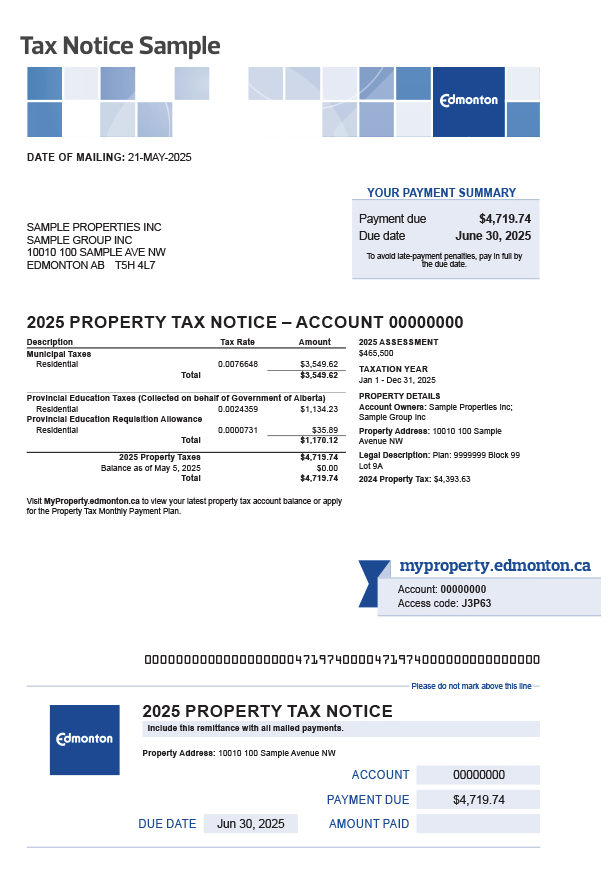
Property tax is a yearly charge that property owners pay to help fund services and programs that support the community, like fire and police services, roads, transit, parks, libraries, recreation centres, community programs, and public education.
In Edmonton, your property tax bill includes two main components:
Municipal property taxes — set by the City of Edmonton to fund city services and programs.
Education property taxes — collected by the City on behalf of the Alberta government to support public and separate K–12 schools.
2. What Is a Property Assessment?
Before taxes are calculated, you receive a property assessment notice every January.
Here’s how it works:
Assessors estimate the market value of every property in the city based on data such as recent sales, size, age, style, location, and condition.
This value isn’t necessarily what your house would sell for today, but an estimate of market value based on past sales and trends.
The assessed value is used to determine your share of property taxes relative to all other properties.
So when you hear, “your home value went up,” that’s referring to the assessed value — not your tax bill itself. If assessments across the city rise, the total tax base increases, but each homeowner’s share depends on how their specific assessment changed relative to the city average.
3. How Are Property Taxes Calculated?
There are three pieces to the calculation:
The City’s Budget
The City Council determines how much money it needs to run municipal services for the year.The Total Assessed Value
All properties in Edmonton are assessed and added together.Your Share
The City divides the budget by the total assessed value to create a tax rate — then applies that rate to your property’s assessed value.➤ Simply put:
Your Property Tax = (Your Assessment × Tax Rate)
This means your share of taxes is proportional to the value of your home compared with the total value of all homes in the city.
4. Where Does the Money Go?

Your property tax dollars support:
Municipal Services
Fire & police protection
Road maintenance, bridges & sidewalks
Snow removal
Transit (buses & LRT infrastructure)
Parks, recreation centres & public spaces
Libraries & community programs

Education
The Government of Alberta sets the education property tax, and the City collects it for both:
Public schools
Separate (Catholic) schools
Education tax funds teachers’ salaries, classroom resources, and school operations across Alberta.
5. What If You Disagree With Your Assessment?

Getting a higher assessed value — especially if your market value went up — can feel frustrating, but there are options:
1. Review First
Check your assessment carefully. Mistakes can happen — wrong square footage, incorrect age, or misclassified features.
2. Talk to an Assessor
Call 311 or schedule a chat — assessors can often explain the details and correct errors without a formal dispute.
3. File a Formal Complaint
If you still disagree after speaking with an assessor, you can file a formal complaint with the Assessment Review Board (ARB) before the deadline (typically March each year). There’s a small filing fee, which is refunded if your assessment changes.
The ARB is an independent tribunal that reviews assessment complaints and hears evidence from both sides.
6. Key Dates to Remember
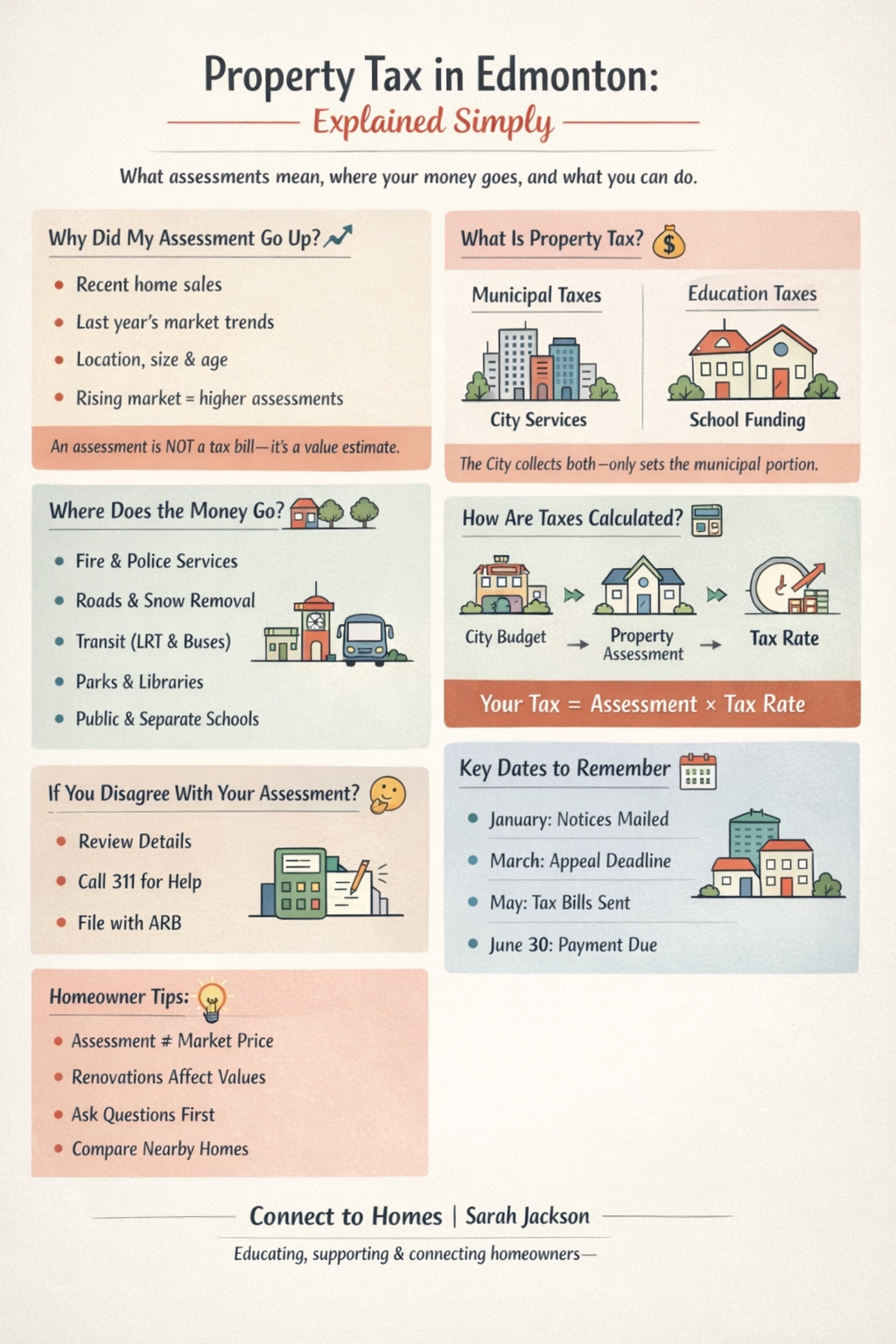
January: Property assessment notices mailed
January–March: Assessment review period (deadline to dispute)
May: Property tax bills mailed
June 30: Property tax due date (or enroll in a monthly payment plan)
7. Helpful Tips for Homeowners
Compare your assessment with similar homes nearby before filing a dispute.
Consider the Monthly Payment Plan if budgeting makes a lump-sum payment challenging — it lets you spread the cost over 12 months.
Use tools like the City’s Property Tax Estimator to get a sense of your upcoming bill.
8. Assessment Value ≠ Listing Price
Your assessed value is based on mass appraisal models and past sales data — not staging, emotion, or negotiation.
It’s a benchmark, not a promise of what your home would sell for today.
9. Renovations Can Affect Future Assessments
Major upgrades like finished basements, added garages, or significant renovations can increase future assessments. Routine maintenance (roof, furnace, windows) usually does not raise assessments — but it can protect value long-term.
10. Ask Before You Appeal
Many homeowners file appeals without first speaking to an assessor. A quick call to 311 can clarify how your value was calculated — and sometimes resolve errors without a formal complaint.
In Summary
Property tax is one of the main ways we collectively fund the services that make Edmonton function — from parks and transit to schools and safety. Your assessed value affects what portion of the total tax burden you pay, but the tax itself goes toward city and provincial priorities that support our community’s quality of life.